
COMMUNITY
The sustainable fashion community has always had something of a collective consciousness when it comes to strategy shifts. Maybe these are just a response to the natural order of things, and by this I mean a return to common-sense, regenerative, indigenous-led practices.
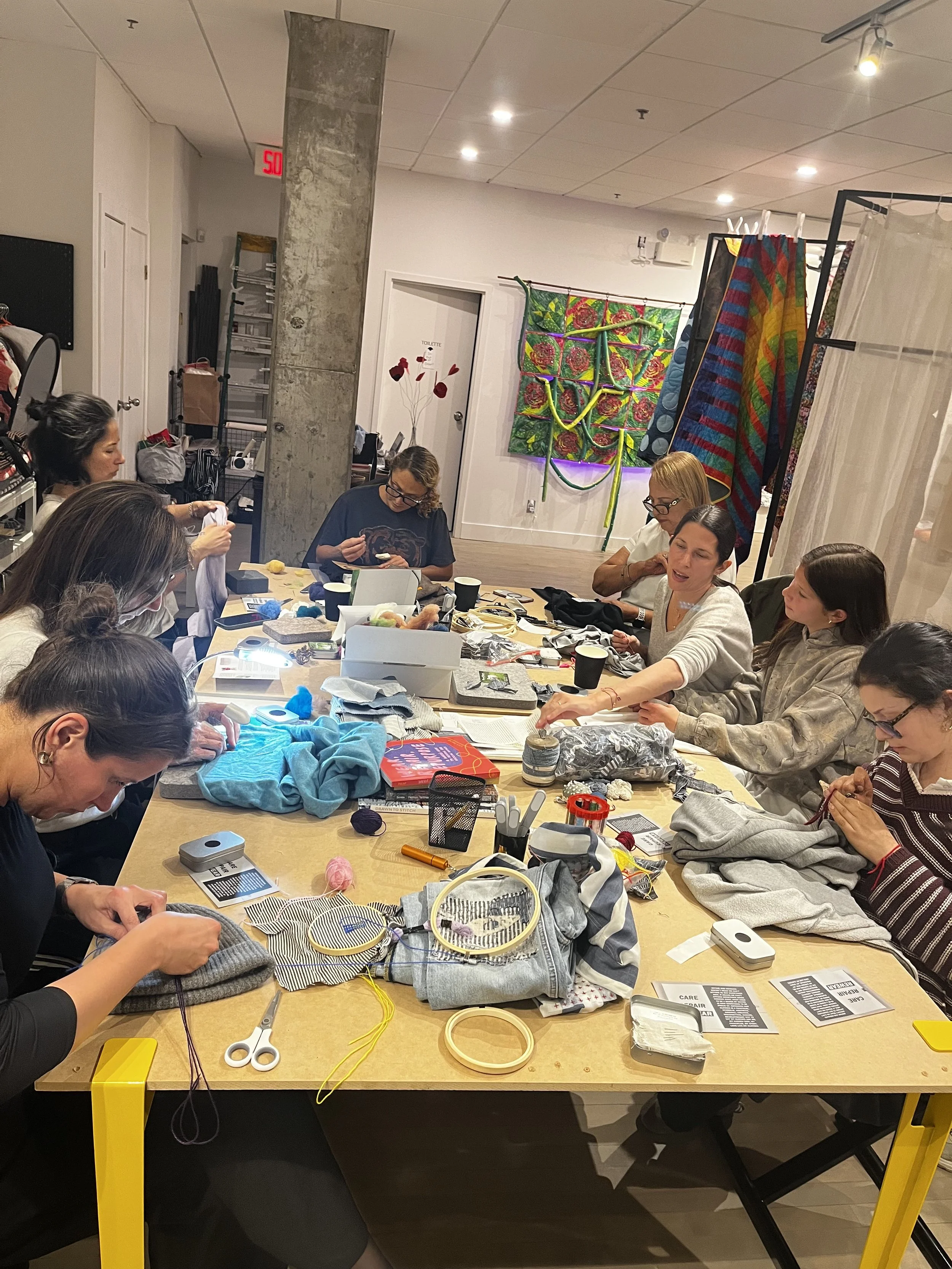
Point de Repère may never have opened its doors if it hadn’t been for the support and encouragement of the community I’ve built around me since moving back to Montreal. First and foremost the support from my new neighbours MAKTABA, a bookshop that I love and frequent (maybe too often). When Sundus, one of the owners - and someone I consider a friend - mentioned a few months ago that the space next door to them was available, I honestly didn’t think too much of it. At the time I wasn’t looking for a space and didn’t want to be tethered to a physical location (again). At least not at that point in time. But she must have planted a seed that slowly took root.
The next piece of the puzzle was put in place when I gave a talk on the circular economy in fashion as part of a new event series called Apocalypse & Apéritifs. The series was launched by a friend who emphatically supported the idea for Point de Repère when it was only a small seed of an idea.
The sustainable fashion community has always had something of a collective consciousness when it comes to strategy shifts. Maybe these are just a response to the natural order of things, and by this I mean a return to common-sense, regenerative, indigenous-led practices. But I’ve seen this phenomenon on more than one occasion in my 25-year career. The latest iteration would be Orsola de Castro - one of the co-founders of Fashion Revolution - launching My Mender, a global map of repair hubs and circular solutions.
I’ll take this as a sign that I’m on the right track…
THE RIGHT TO REPAIR
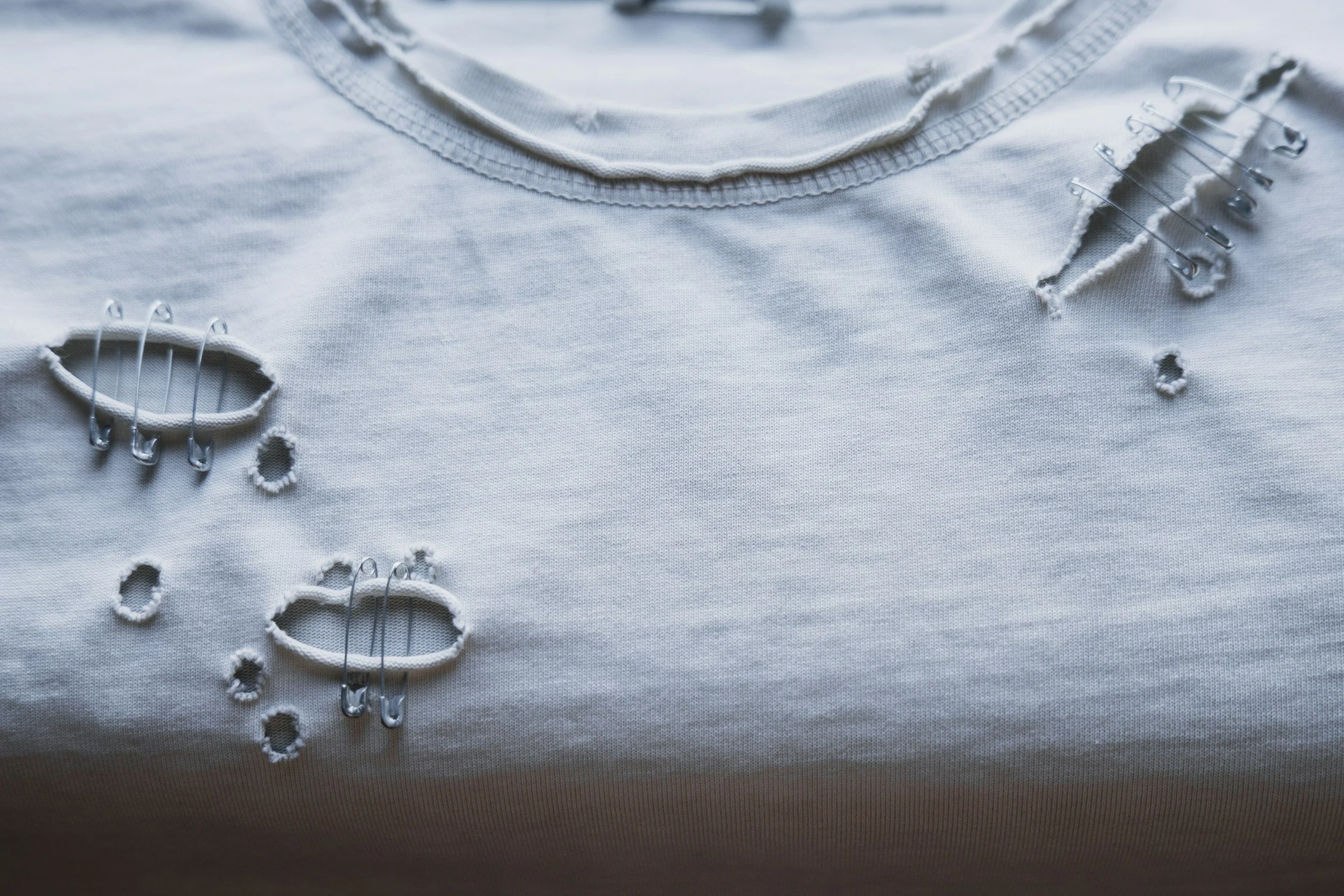
There's something almost embarrassingly obvious in all this: repairing clothes isn't a new idea we invented, it's an old habit fashion talked us out of. Communities that never had the luxury of disposability, across the global majority, and plenty of working-class communities everywhere else, have been doing real circularity this whole time, without a sustainability department or a press release.
So here's my pitch, the raison d’être of this shop, as a matter of fact: bring us the thing you actually love, the one with the hole in the elbow you've been ignoring for eight months. Let's put it back together. Question everything, including the idea that broken means done.
MENDING IS NOT A DOWNGRADE
I keep coming back to the same four words: recycle, rent, resell, repair. Everyone loves the first three because they still let the industry sell you something new. Repair is the odd one out. It just asks you to keep wearing what you already own. This shouldn’t be radical, but somehow it is.
A 2025 study from the UK's WRAP found that when someone gets an item repaired, it replaces a new purchase over 80% of the time. That's not a nice environmental footnote, that's a business threat to anyone whose model depends on you buying more. No wonder brands have taken their time warming up to it.
But that is changing. Patagonia has quietly built a 100-person repair operation and nearly tripled the number of garments it fixes each year since the early 2020s. Levi's has had Tailor Shops since 2010. Selfridges, Toast, Marks & Spencer - all engaging with repair in some capacity. Some charge for it, some absorb the costs.
However, I'm more interested in what's happening at the smaller scale, like us: repair cafés, sewing circles, neighbourhood ateliers. Montreal has seen a rise in community-driven repair programs: Growing ARC, Brique par Brique, and Espace Fabrik to name a few. The people showing up aren't fast-fashion casualties looking for a free fix; they're the ones who already chose well and just need help keeping that choice alive. That's the same energy that walks through our doors. It's not about saving money, though it does. It's about learning to look at a torn seam and see a Tuesday evening instead of a trash bag.
There's also something almost embarrassingly obvious in all this: repairing clothes isn't a new idea we invented, it's an old habit fashion talked us out of. Communities that never had the luxury of disposability, across the global majority, and plenty of working-class communities everywhere else, have been doing real circularity this whole time, without a sustainability department or a press release.
So here's my pitch, the raison d’être of this shop, as a matter of fact: bring us the thing you actually love, the one with the hole in the elbow you've been ignoring for eight months. Let's put it back together. Question everything, including the idea that broken means done.
Sources & further reading:
WRAP, Displacement Rates Untangled — the 82.2% repair displacement figure
Open Repair Alliance, The Rise of Community Repair (2024) — global repair-group and repair-count data
Further reading: Lauren Cochrane, The Right to Repair Your Wardrobe, Atmos
DO NOT MEND ME, ALLOW ME TO AGE.
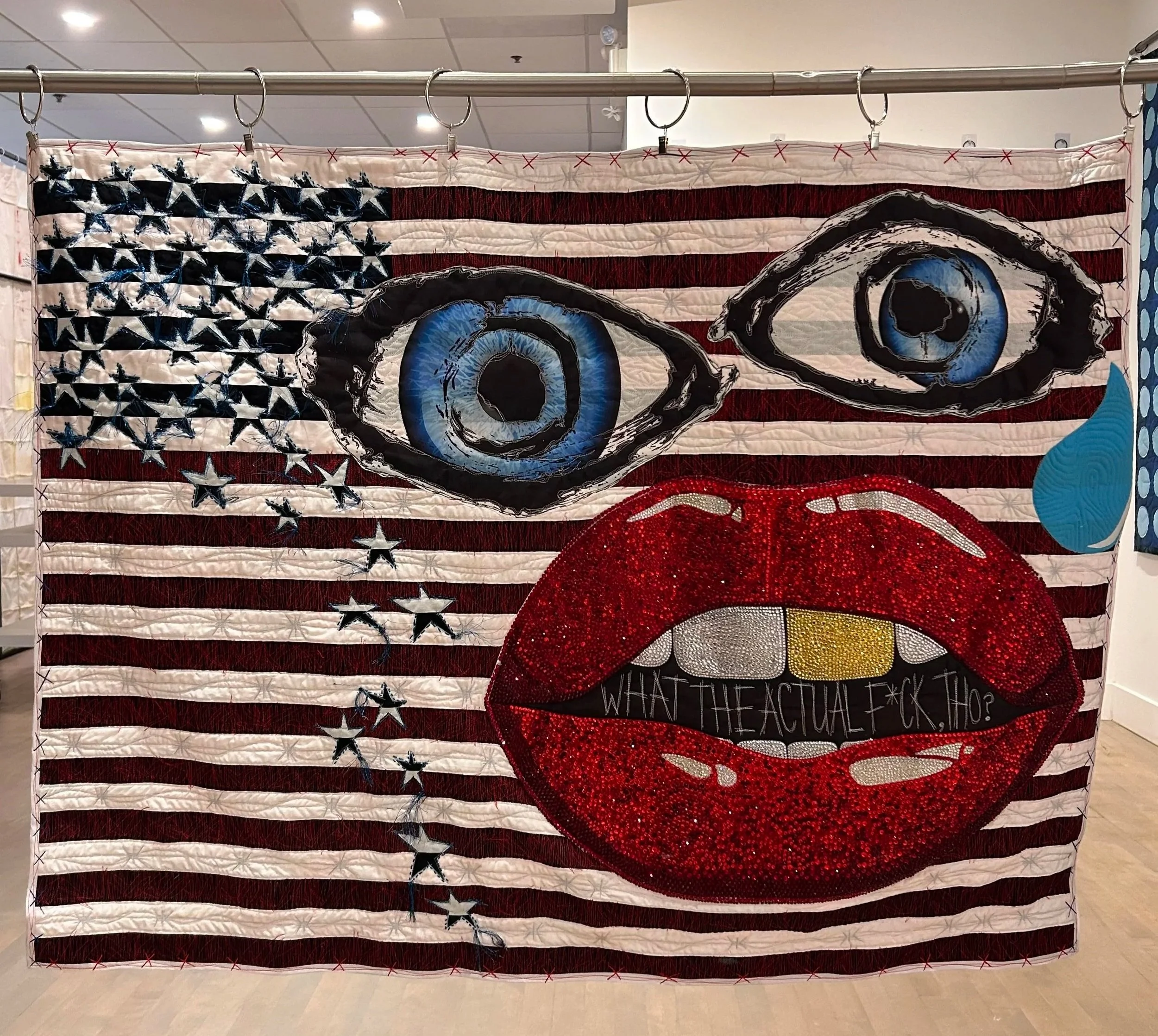
I felt it was important to open a textile art gallery in Old Montreal because the medium is not well represented in the city’s multitude of galleries, despite there being many talented textile artists working in and around Montreal. The other reason was a little more selfish, I happen to love being surrounded by textiles and textile art and if I’m going to sit in a space every day I want it to inspire me and make me smile, the same way it makes many visitors to the space smile - or even chuckle - as they enter. It doesn’t hurt that they’re being greeted by a big middle finger in the entrance.
Some musings on the first solo exhibit by our DEBUT artist Jordan St. James (who also happens to be my brother).
I felt it was important to open a textile art gallery in Old Montreal because the medium is not well represented in the city’s multitude of galleries, despite there being many talented textile artists working in and around Montreal. The other reason was a little more selfish, I happen to love being surrounded by textiles and textile art and if I’m going to sit in a space every day I want it to inspire me and make me smile, the same way it makes many visitors to the space smile - or even chuckle - as they enter. It doesn’t hurt that they’re being greeted by a big middle finger in the entrance.
The other reason I wanted to focus exclusively on textile art was succinctly summarized in this article in Frieze aptly titled The Artificial Divide Between Fine Art and Textiles is a Gendered Issue:
Artforms using textiles have existed for millennia but have not always been held in such high esteem in the art world. The artificial divide that exists between fine art and textiles (or applied/decorative arts, or craft) is a gendered issue. ‘Textiles have always suffered as an art media because of their association with domesticity and femininity,’ says Hannah Lamb of The 62 Group of Textile Artists, an artist-led pressure group that has been promoting textiles as a fine art for nearly 60 years. Historically, textiles have been labelled ‘women’s work’, and dismissed as inferior to pursuits such as painting and sculpture. But this has not always been the case.
Some visitors knew about the exhibit thanks to the artist’s husband Montreal Expert who posted about it on his well-loved account, others wander in after visiting our neighbours and friends MAKTABA next door, but most just stumble on the exhibit and generally express surprise, gratitude for the humorous commentary in the exhibit, and appreciation for showing an artform that is often overlooked by the art world. While the exhibit has only been up for less than a month, it seems to evoke similar reactions in people:
“What is this magical space?” (my favourite so far)
“Please tell the artist how much his work has inspired me.”
“Oh my god, so many quilts!”
So it seems Old Montreal wanted / needed a textile art gallery that also offers garment repairs and alterations and also hosts workshops - our first one is already sold out! - to teach these skills and also sells upcycled clothing and a curated selection of mending tools. I still haven’t found the best way to summarize this.
In the meantime, Jordan’s exhibit DEBUT will be up until mid October, so come see it and add to my growing list of favourite reactions.
QUESTION EVERYTHING
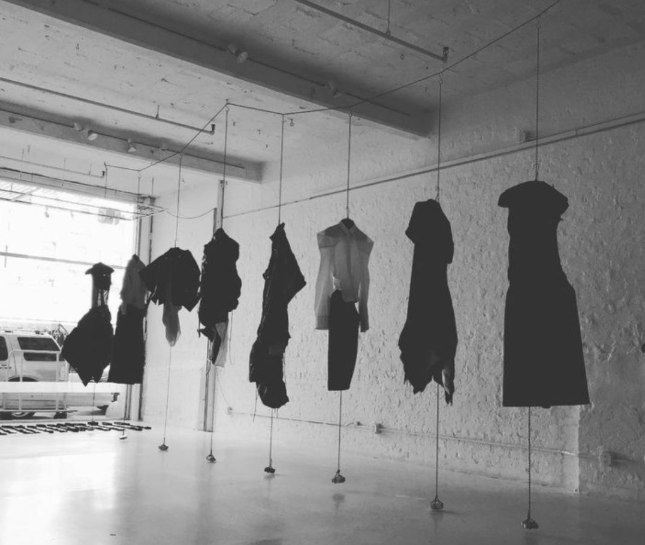
“Beauty here is not a fixed ideal but a questioning presence. Making becomes a process of discovery, a dialogue that carries the traces of intention and imagination. Visitors move through moments of resonance and disruption, where perception awakens and possibilities unfold, and craft reveals itself as an ongoing process of inquiry and encounter.” - Dries Van Noten
Or, as the Virgil Abloh quote in the entrance of the shop more succinctly states: QUESTION EVERYTHING. That, I can do.
Welcome to Point de Repère.
Dries Van Noten, a designer I have admired since studying fashion design in the 1990s, recently opened Fondazione in Venice where the inaugural presentation is entitled The Only True Protest Is Beauty. It’s not true, of course. At least, I don’t actually believe the title to be true. But I was listening to an interview with designer turned art curator discussing the opening which “frames beauty as a catalyst for intensity, provocation, and transformation” during a very protest-heavy time in my life. Nonetheless the provocative title tripped a fuse and triggered a series of tiny moments of inspiration in a very dark world that ultimately led me to create POINT DE REPÈRE, my point of reference.
I’ve spent most of my 25+ year career in the fashion industry questioning both how and why things are done the way they are. That curiosity is what led me to want to make change in an industry that both fascinated and horrified me. It is the reason I veered toward sustainability in 2002 when there were very few resources for brands and even fewer incentives to do so. Some would say that makes me a pioneer, and I am now shedding the humility that prevented me from admitting as much on countless occasions. Life is too short for humility anyway! But I digress.
The aforementioned lack of resources is what caused me to seek out community in New York - to share sustainable suppliers, test out strategies and grow together. That idea of community has followed me in my career and is the one key ingredient that I will never overlook. It was a priority to rebuild a community in Montreal when I moved back here after nearly 20 years in New York. And something I work at diligently every day.
As the industry evolved, both dismissing and embracing sustainability as it sees fit - oscillating between “it’s just a trend, people don’t care” and “how can sustainability help us stand out as a brand?” - it inadvertently supported the development of vast amounts of trade resources: roadmaps, strategy guides, 100-page meticulously researched reports that very few people would read, it simultaneously saw the rise of the ultra fast fashion brands developing and producing at a speed I never thought possible.
“Beauty here is not a fixed ideal but a questioning presence. Making becomes a process of discovery, a dialogue that carries the traces of intention and imagination. Visitors move through moments of resonance and disruption, where perception awakens and possibilities unfold, and craft reveals itself as an ongoing process of inquiry and encounter.”
Or, as the Virgil Abloh quote in the entrance of the shop more succinctly states: QUESTION EVERYTHING. That, I can do.
Welcome to Point de Repère.